About Kelston Girls' College


Kelston Girls’ College began life in 1954 as a school for girls and boys.  It grew so rapidly that by 1959 the students were segregated on separate campuses and in 1963 Kelston Girls was officially established.

Over the years, Kelston Girls’ High School has offered a clear choice of education for young women.  It is the only state secondary school for young women in West Auckland and has a strong tradition of excellence in academic, cultural and sporting endeavours of which students, staff and alumni are justifiably proud.

The original wooden panelled corridors of the school remain, but much else has been modernised.  The Arts rooms including a purpose built dark room for photography and a new Music suite, the Food and Fabric Technology rooms, including a practice kitchen, the International Language classrooms, including a kitchen for cooking and sampling food from other cultures, the upgrade of the school hall as a performing arts facility, the computer pods in every faculty and six classrooms of computers are the latest developments in the School Board’s programme for continuous improvement of facilities.

In 2004, Kelston Girls celebrated 50 years in existence.  As part of planning for the next 50 years, the Board, in consultation with the community, decided to undergo a change of name.  The school is now Kelston Girls’ College.

We opened the Islay Anderson Auditorium and Music faculty in 2006.  Building a new administration block begins in November 2008.  In 2009 the Hauora Centre the well being centre for students will move to a newly renovated wing in the school.

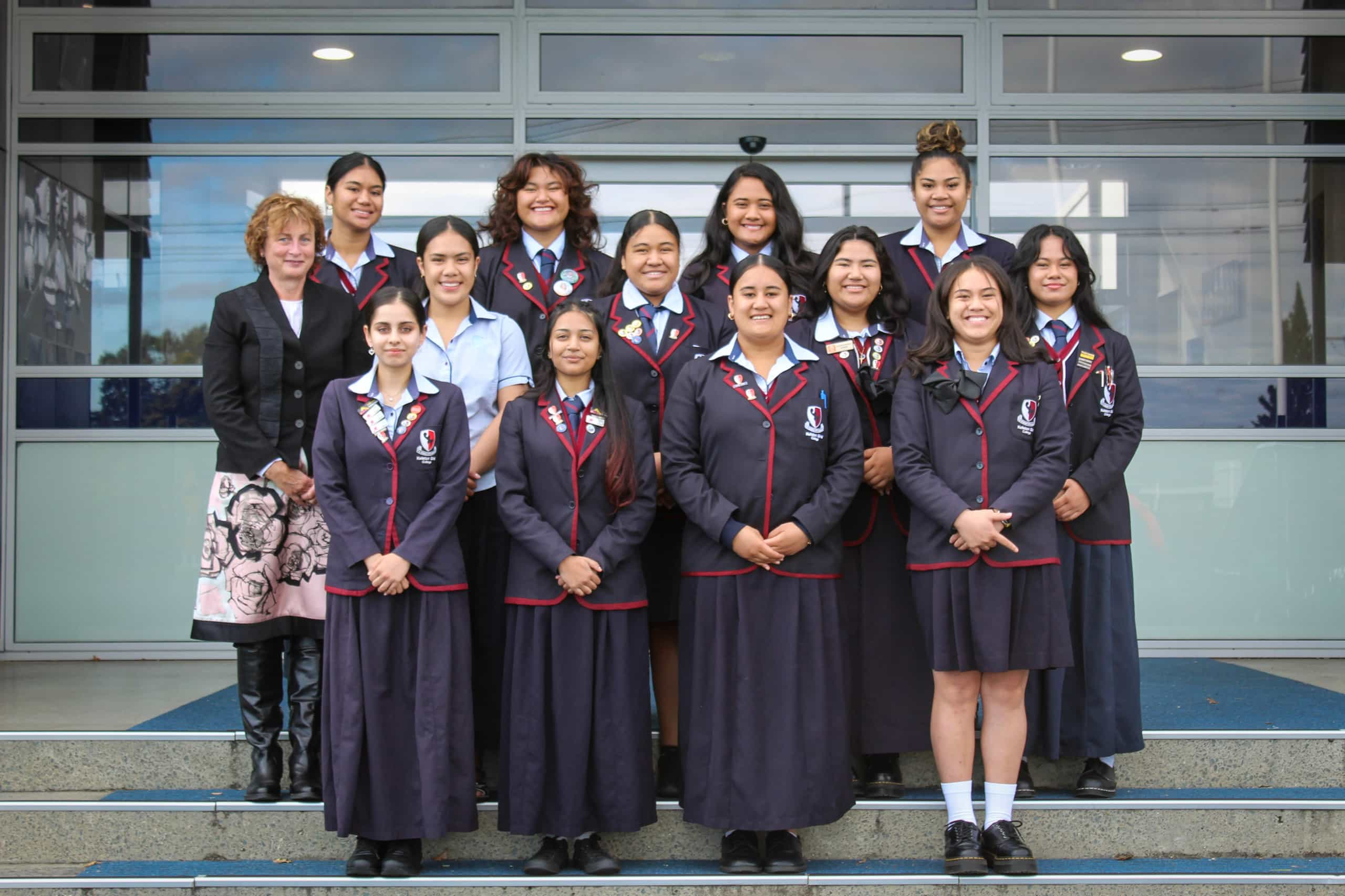
Leadership opportunities are available for all students.  The Student Council meets weekly and the 80 plus representatives play a valuable role in the organisation of school activities. Trained Peer Supporters work with Year 9 students.  Captains and coaches of sports teams receive leadership training.  Students are invited to volunteer as buddies for visiting overseas students. Prefects receive leadership training and manage committees such as: Sports Committee, Student Council, Academic Committee, Environment Committee, Enterprise Committee and The Arts Committee.

Te Kotahitanga was introduced at the end of 2006 and under pins the philosophy of respect and understanding for culture, coupled with high expectations for teachers and students.


Gifted and Talented programme

Kelston Girls’ College recognises through an extensive programme, that students may be gifted or talented, not only academically but also in other ways, such as culturally, in sport, and in relationship with others.  Such is the strengths of its programme that it has been included in the ERO report on Gifted and Talented programmes in New Zealand schools.  

One of the strengths of Kelston Girls’ College is its co-curricular programme :  

§  Performing Arts (dance including cultural dance, music and drama)

§  Sport

§  Debating

§  Chess

§  Environment

§  Talent quest

§  Multi cultural activities